
By Kayla Stroud, Communications and Events Specialist
In late July, as the Dawson County School System prepared for the new academic year, educators focused on more than lesson plans and classroom supplies — they were also equipping themselves with potentially lifesaving mental health training.
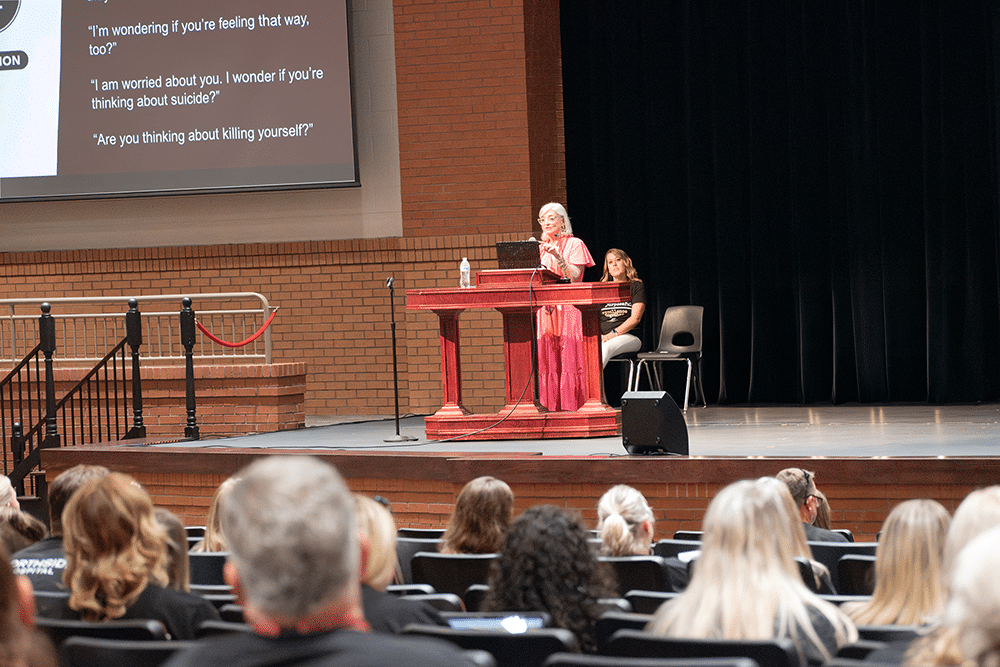
The Georgia Rural Health Innovation Center, at Mercer University School of Medicine, was invited to lead QPR (Question, Persuade, Refer) suicide prevention training for more than 500 faculty and staff members across the county, from kindergarten through 12th grade.
Jordan LeFevre, the mental health specialist for Dawson County Schools, played a key role in bringing the training to teachers and staff. With nearly a decade of experience in the school system — including seven years as a counselor — LeFevre understands the importance of early mental health intervention, especially in rural communities.
“I love QPR,” LeFevre said. “I’ve taken it several times myself and thought it would be a great way for our staff to start the school year with a better understanding of what could be walking into in their classrooms, as far as direct and indirect signs of suicide, and wanting to make sure they had a plan in place to confidently refer them to the appropriate resources.”
QPR training teaches participants how to recognize warning signs of suicide, ask direct questions and connect individuals in crisis with professional care. The one- to two-hour sessions, offered in schools, workplaces and community settings, provide strategies for safe intervention and give participants the confidence to respond effectively.
In rural areas like Dawson County, where access to mental health services is limited, educators can often serve as the first line of support.
“In a rural community, teachers are really seen as one of the best source of information for all things,” LeFevre said. “Most students aren’t going to a psychiatrist or even know how to find a counselor. Their teacher or school counselor is everything. And if they have the resources and tools to keep them safe, that’s the best thing I can do for our students.”
Like most rural counties, Dawson County families often have difficulties reaching in-person mental health providers, sometimes traveling up to an hour for a single appointment. LeFevre said the county’s use of telehealth services and training programs like QPR has helped bridge that gap, allowing students to see providers virtually and connect with staff during the school day.
Even with limited access to on-site providers, LeFevre believes anyone can learn QPR.
“You don’t have to be a counselor,” LeFevre said. “You just have to have a willingness to learn and step up. Don’t wait for someone else. You be the one.”
Asked how educators can best support student mental health in rural areas, LeFevre said, “Be aware. Get to know your students and their families. Know what’s going on in their lives. Don’t be afraid to ask questions.”